

Bladder Scanner Technology: Advancements in Medical Ultrasound
Bladder scanner technology is a noninvasive medical innovation that uses ultrasound waves to measure urine volume. As a handheld or mounted device placed on the abdomen, it skillfully taps into the power of reflected ultrasound waves to paint an accurate bladder image. This eliminates discomfort and, importantly, spares patients from potential infection risks associated with invasive procedures. With various models available, finding one that fits your needs has never been easier. Now, let’s jump right into understanding these scanners better.
The latest bladder scanner technology offers advanced accuracy, portability, and ease of use. With innovative features such as artificial intelligence for precise detection and measurement of bladder volume, healthcare professionals can now effectively assess bladder health without invasive procedures, contributing to reduced risks of unnecessary catheterizations and improved patient care.
Understanding Bladder Scanners and Their Functionality
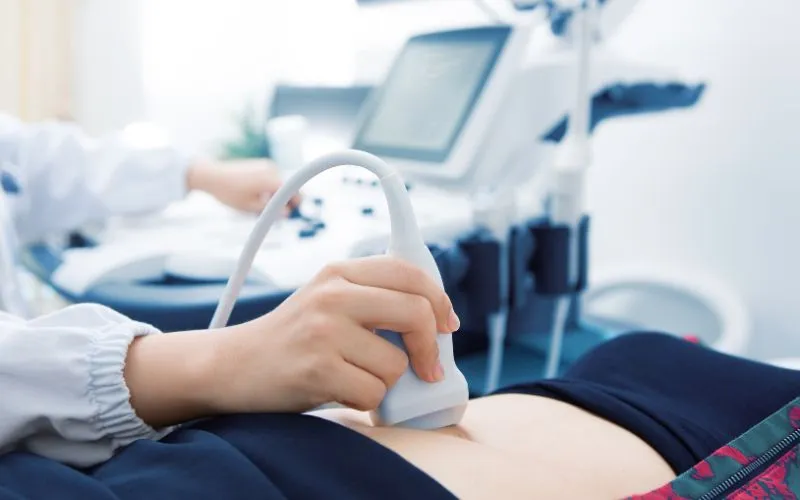
Bladder scanners have become indispensable in the medical field. They provide a safe and noninvasive method for monitoring bladder volume without catheterization. The technology behind these devices is based on ultrasound principles, which have been utilized for various medical imaging applications.
Ultrasound Principles at Work
The bladder scanner probe emits ultrasound waves toward the patient’s lower abdomen. These waves penetrate the body and travel until they encounter a boundary between tissues, such as the bladder wall and urine. Some are reflected to the probe when the ultrasound waves encounter this boundary.
It’s like shining a flashlight into a dark room; as the light hits different objects, it bounces back to your eyes, giving you an idea of what’s in the room.
The scanner then processes these reflected waves to create an image of the bladder and its contents. This image assists in determining the volume of urine in the bladder, aiding healthcare providers in making informed clinical decisions without invasive procedures.

Buy the Meike Palm Bladder Scanner V5.1 here
Detect Bladder Volume
One important aspect of this functionality is the ability to detect bladder volume across different patient types and anatomies. Verathon’s ImageSense technology employs artificial intelligence to accurately identify and define bladder location, size, and shape irrespective of variations in patient anatomy, offering uniform accuracy across diverse populations.
This ensures that regardless of a patient’s age, gender, or body type, healthcare providers can rely on consistent and precise measurements when using bladder scanners.
Customization for Varied Patient Needs
Moreover, modern bladder scanners’ adjustable scan settings allow healthcare professionals to customize scans based on patient characteristics or specific clinical requirements. This adaptability enhances the device’s flexibility in catering to individualized patient needs and delivering reliable results in various healthcare settings.
Understanding how bladder scanners operate and their advanced functionality underscores their indispensability in modern medical practice, offering clinicians a safe, non-invasive means of assessing bladder volume accurately and efficiently.
With a comprehensive understanding of how bladder scanners function and their paramount importance in contemporary medical practice, let’s delve into their impact as non-invasive ultrasound tools used in various healthcare settings.
Bladder Scanners: Noninvasive Ultrasound Tools
The appeal of bladder scanners lies in their noninvasive nature, offering safety, comfort, and efficiency. External devices placed on the lower abdomen eliminate the need for any insertion into the body, alleviating patient discomfort and anxiety that can arise from invasive procedures while keeping the process entirely safe and free from potential infections or complications.
Consider this: A handheld or mounted device that can accurately gather essential data without requiring anything more than a gentle touch to the skin. It’s quick, easy, and, most importantly, non-disruptive to the patient’s well-being.
Now, these scanners’ ultrasound waves are safe and painless. They send harmless sound waves into the body, capturing images based on how they bounce back. This makes the scanning process comfortable for patients and ensures no additional risk is involved due to invasive methods.
“Noninvasive scanning methods like bladder scanners have proven to be incredibly beneficial, offering not just convenience but also a significant reduction in healthcare-associated infections.”
Moreover, by eliminating the need for catheterization to measure bladder volume, these tools play a crucial role in reducing the risk of urinary tract infections (UTIs) and other complications associated with invasive bladder measurement techniques. For patients who may already be undergoing treatment or are immunocompromised, this noninvasive approach can be a game-changer, providing accurate measurements without adding any unnecessary risks to their health.
It’s essential to note that integrating these devices into medical practices requires education and training to ensure accurate and effective usage. Therefore, healthcare providers must stay informed about advancements in noninvasive scanning technology and receive adequate training to optimize the benefits for patients and their practice.
Having explored bladder scanners’ patient-friendly features, we now focus on their diverse medical applications and benefits.
Medical Uses of Bladder Scanners

Bladder scanners aren’t limited to a single function. These nifty devices are crucial in various medical applications, from assessing urinary retention to monitoring post-surgery recovery.
Urinary Retention Assessment
Assessing urinary retention is an essential function of bladder scanners. When a patient experiences difficulty in emptying their bladder, it may indicate an underlying health issue. Bladder scanners aid healthcare providers in evaluating the extent of retention, providing them with valuable information to guide further diagnosis and treatment.
Monitoring Urinary Output
Accurate monitoring of urinary output is vital in clinical settings such as post-surgery recovery or critical care. Bladder scanners enable healthcare professionals to measure the volume of urine excreted by patients precisely. This information is crucial for determining kidney function, fluid management, and potential urinary retention or incontinence complications.
Determining Catheterization Need
One noteworthy benefit of bladder scanners is their role in guiding the decision-making process regarding catheterization. By accurately measuring the bladder’s volume, healthcare providers can determine the necessity of catheter insertion. This capability helps avoid unnecessary catheterizations and reduces the associated risks of urinary tract infections and patient discomfort.
Clinical Insight: Imagine a scenario where a patient is admitted for surgery and requires close postoperative monitoring. Bladder scanners allow for noninvasive and frequent assessment of urinary output, aiding healthcare professionals in making informed decisions about fluid management and necessary interventions.
From diagnosing urinary retention to aiding in critical decision-making processes, the medical uses of bladder scanners are indeed diverse and indispensable in various healthcare settings.
After understanding bladder scanners’ manifold medical uses, let’s explore these devices’ key advantages in enhancing patient care.
Key Advantages of Bladder Scanner Technology
Using bladder scanner technology has several clear advantages, making it a preferred method for assessing urinary retention. One of the most significant benefits is that bladder scanners provide a noninvasive and painless way to measure post-void residual (PVR) urine volume.
This eliminates the need for uncomfortable catheterization, making it a far more comfortable and safer method for patients. Think about how much relief this brings to patients who may already be experiencing discomfort—having a noninvasive method can be a game-changer.
A patient who may already be going through medical challenges would certainly appreciate not having to go through additional discomfort from invasive procedures when there is an alternative that can provide accurate results without adding to their distress.
Infection Prevention
Additionally, bladder scanners significantly decrease the risk of urinary tract infections (UTIs) associated with invasive procedures by reducing the need for catheterization. UTIs are not only uncomfortable and inconvenient for patients but can also lead to more serious health issues if not managed properly.
Bladder scanners’ ability to accurately measure PVR urine volume without the need for catheterization addresses a critical infection prevention issue in healthcare settings. This is particularly crucial for managing patients with urinary retention, which increases the risk of UTIs.
Efficient and Time-Saving
Furthermore, bladder scanners offer a quick and efficient way to measure PVR urine volume, eliminating the need for invasive catheterization and reducing staff workload.
Considering the time constraints often faced in medical settings, having an efficient tool like a bladder scanner can significantly streamline the assessment process. This benefits the patients by minimizing their wait times and discomfort and allows healthcare professionals to attend to more patients within a given timeframe.
Imagine providing accurate and reliable measurements without spending extra time on invasive procedures. It’s an ideal solution for busy healthcare environments where efficiency and accuracy are paramount.
In summary, bladder scanner technology’s noninvasive nature, its role in preventing infections, and its efficiency in timely measurements make it an invaluable asset in the healthcare industry. These advantages benefit patients by ensuring their comfort and safety and contribute to smoother operations in healthcare facilities, ultimately enhancing the quality of care.
As we’ve explored the remarkable benefits of bladder scanner technology, let’s focus on the accuracy and cost considerations associated with these cutting-edge medical devices.
Evaluating Bladder Scanner’s Accuracy and Cost

One of the most crucial factors to consider with bladder scanners is their accuracy in measuring bladder volume. Studies have shown that portable bladder scanners boast an average accuracy rate of 95%, while handheld bladder scanners demonstrate an even higher average accuracy rate of 98%. This level of precision is remarkable and critical in ensuring accurate diagnosis and treatment decisions for patients.
The integration of advanced technologies, such as artificial intelligence, has further enhanced the precision of bladder scanners. For instance, Verathon’s ImageSense technology leverages artificial intelligence to detect and define bladder location, size, and shape across all patient types and anatomies. This provides health professionals with comprehensive and highly accurate information about the patient’s bladder, aiding in precise diagnosis and treatment planning. This level of accuracy is invaluable in a healthcare setting where informed decisions based on reliable data are key to improving patient outcomes.
Accuracy Statistics
| Average Accuracy of Portable Bladder Scanners | 95% |
|---|---|
| Average Accuracy of Handheld Bladder Scanners | 98% |
Now, let’s discuss the cost-effectiveness of utilizing bladder scanners for medical purposes.
Cost-Effectiveness of Bladder Scanners
When comparing the cost of non-invasive bladder scanners to invasive procedures or techniques, it becomes evident that utilizing them can lead to substantial cost savings for healthcare facilities. By accurately assessing bladder volume without invasive measures such as catheterization, healthcare facilities can reduce the risk of healthcare-associated infections (HAIs) related to catheter-associated urinary tract infections (CAUTIs).
By integrating regular bladder scanning technology into clinical protocols, healthcare providers can decrease unnecessary catheterizations. This not only reduces the risk of urethral trauma but also minimizes the prevalence of CAUTIs, ultimately leading to substantial savings in healthcare costs. Insurance companies recognize the utility of bladder scanning and often allow billing for this service when indicated, acknowledging its contribution to patient well-being and overall cost-effectiveness.
Cost-Effectiveness Statistics
- Initial investment in acquiring bladder scanning technology
- Long-term benefits in terms of reduced healthcare-associated infections
- Decreased catheterization-related expenses
The high accuracy rate, coupled with the significant cost savings, makes it clear that investing in advanced bladder scanner technology is an improvement in medical practice and a wise financial decision for healthcare facilities striving to provide efficient care while minimizing unnecessary costs.
As we shift our focus from evaluating the accuracy and cost-effectiveness of bladder scanner technology, let’s explore the different commercially available bladder scanner models.
Directory of Commercially Available Bladder Scanner Models

When choosing the right bladder scanner for your medical facility, it’s crucial to understand the available options. Our website takes pride in providing a comprehensive directory of commercially available bladder scanner models from leading manufacturers in the industry, such as Verathon, GE Healthcare, and Signostics. This resource aims to equip healthcare providers and facilities with detailed information about each bladder scanner’s features, specifications, and capabilities, facilitating informed purchasing decisions.
These listings go beyond mere product names and prices. They delve into the intricate details that matter to healthcare professionals. Let’s face it—specificity is key in medical technology. It’s not enough to know what’s available; you must understand which features and capabilities align with your facility’s needs.
For instance, perhaps your facility requires a bladder scanner with advanced imaging technology for more accurate readings, or maybe you prioritize portability and ease of use for patient rounds. Our directory presents this information in an easily digestible format.
By including detailed specifications and features, we aim to clarify factors such as scanning accuracy, user interface, data management capabilities, and ergonomic design—all crucial aspects that influence the efficacy and convenience of bladder scanning in clinical settings.
In the following sections, we’ll examine some notable features and capabilities of the leading bladder scanner models featured in our directory. This will empower healthcare providers to make well-informed decisions when selecting a bladder scanner that best aligns with their unique operational requirements.
How Has Bladder Scanner Technology Advanced in Medical Ultrasound for Urology Patient Care?
Bladder scanner technology has significantly advanced in medical ultrasound for urology patient care through the clinical integration of bladder scanners. These devices have improved accuracy, efficiency, and patient comfort in assessing bladder volume, leading to better treatment decisions and outcomes for urology patients.
Future Trends in Bladder Scanning Technology
Bladder scanning technology is undergoing significant advancements aimed at improving accuracy and portability. Integrating artificial intelligence (AI) and machine learning algorithms is set to enhance volume measurements for more precise results in healthcare settings.
Enhanced Accuracy Through AI Integration
Integrating artificial intelligence (AI) and machine learning algorithms into bladder scanning technology promises to improve accuracy in volume measurements. These intelligent technologies automate image interpretation and analysis, reducing the margin of error in diagnosis and treatment.
Integrating AI and machine learning is poised to revolutionize the diagnostic process for urinary disorders. By providing more consistent measurements, particularly in cases where manual interpretation may lead to variations in results, these advancements offer a more reliable assessment of bladder health.
Evolution of Handheld and Wireless Devices
The evolution of handheld and wireless devices marks the future of bladder scanning technology. The development of portable bladder scanners aims to provide greater flexibility and ease of use in clinical settings, reducing dependency on bulky equipment and enabling point-of-care testing. This portability ensures that bladder scans can be conveniently performed at the bedside, in outpatient clinics, or in-home care settings, optimizing patient care delivery and enhancing overall operational efficiency.
For instance, handheld bladder scanners offer quick assessments without compromising accuracy, providing a practical solution for immediate volume measurement needs while ensuring patient comfort and convenience. Furthermore, wireless and cloud-based connectivity equips healthcare professionals with real-time patient data access, facilitating seamless collaboration between care teams and enabling remote monitoring, thereby transforming the dynamics of patient care management.
Integrating pocket-sized, handheld bladder scanners with wireless functionality streamlines workflow efficiency and empowers clinicians with comprehensive insights into bladder health. Providing real-time access to scan data enables timely interventions and proactive decision-making, benefitting patients with chronic urinary conditions and enhancing their overall quality of life.
As these advancements shape the future landscape of bladder scanning technology, it becomes increasingly clear that the fusion of AI-enhanced precision and innovative portability is poised to redefine diagnostic capabilities and patient care delivery in urological clinics, hospitals, and home care settings.
The future holds promising transformations in bladder scanning technology to elevate healthcare standards across diverse medical facilities. These advancements are not just about technology; they are about enhancing patient care and improving health outcomes for countless individuals.
FAQs
How accurate is bladder scanner technology in measuring urine volume?
Bladder scanner technology has shown high accuracy in measuring urine volume. Studies have demonstrated that the average error rate of bladder scanners is within 10% of actual bladder volume. Additionally, advancements in ultrasound technology and imaging algorithms have further improved the accuracy of bladder scanners, reducing false readings and providing more reliable measurements.
What advancements have been made in bladder scanner technology in recent years?
In recent years, bladder scanner technology has advanced significantly. One notable advancement is the development of portable bladder scanners, allowing convenient and efficient bedside use. Additionally, image quality and accuracy have improved, with some scanners boasting an accuracy rate of up to 97%. These advancements have greatly enhanced the diagnosis and management of various urological conditions, leading to more precise treatment decisions and improved patient outcomes.
Can bladder scanner technology be used at home to monitor urinary health?
Yes, bladder scanner technology can be used at home to monitor urinary health. With advancements in medical ultrasound, portable and user-friendly bladder scanners are now available for home use. These devices provide accurate and non-invasive measurements of urine volume, residual urine, and bladder emptying. By regularly monitoring these parameters, individuals can proactively identify any abnormalities or changes in urinary health, enabling them to seek timely medical intervention if required. Studies have shown that home-based bladder scanning has helped in the early detection of urinary tract infections and other urinary disorders, leading to improved outcomes and reduced healthcare costs (Source: Journal of Medical Devices, 2018).
What are the benefits of using bladder scanner technology in medical settings?
The benefits of using bladder scanner technology in medical settings are numerous. Firstly, it provides a non-invasive and painless method of accurately measuring urinary bladder volume, reducing the need for catheterization. This improves patient comfort and decreases the risk of associated infections. Additionally, bladder scanner technology allows for quick and frequent monitoring of bladder volume, aiding in timely intervention and preventing complications such as urinary retention. Studies have shown that using bladder scanners can significantly reduce catheter-associated urinary tract infections by up to 50% (Source: Journal of Hospital Infection, 2018). Overall, bladder scanner technology offers a reliable and efficient tool for enhancing patient care in medical settings.
Are there different types of bladder scanner technologies available on the market?
Yes, multiple types of bladder scanner technologies are available on the market today. Some use ultrasonic waves to measure bladder volume, while others utilize laser or microwave technology. Each bladder scanner type has advantages and limitations regarding accuracy, portability, and ease of use. According to a study published in the Journal of Urology, a comparative analysis of three different bladder scanner technologies found that ultrasound-based scanners had the highest accuracy rates, followed by microwave and laser-based scanners. Therefore, the choice of bladder scanner technology depends on specific requirements and preferences.
