

Handheld Bladder Scanner Features Guide: Portable Medical Tech
Explore the capabilities of handheld bladder scanner features. They are clever tools that measure bladder volume non-invasively. Through clever ultrasound technology, they provide results without causing discomfort or infection risk associated with traditional methods like catheterization. Notably, these portable devices have a special TFT LCD for clear result reading, making it easy for healthcare professionals to provide prompt patient care. And there’s more than meets the eye – these scanners are changing the game in medical setups. It’s time we dive into the advantages of non-invasive measurement.
Handheld bladder scanners typically include features such as a high-resolution display, automatic volume calculation, easy and expert modes for operator accessibility, and a probe for accurate measurements. These devices aim to offer non-invasive and reliable assessments of bladder volume, assisting in diagnosing and managing urinary retention and related conditions.
Non-Invasive Measurement
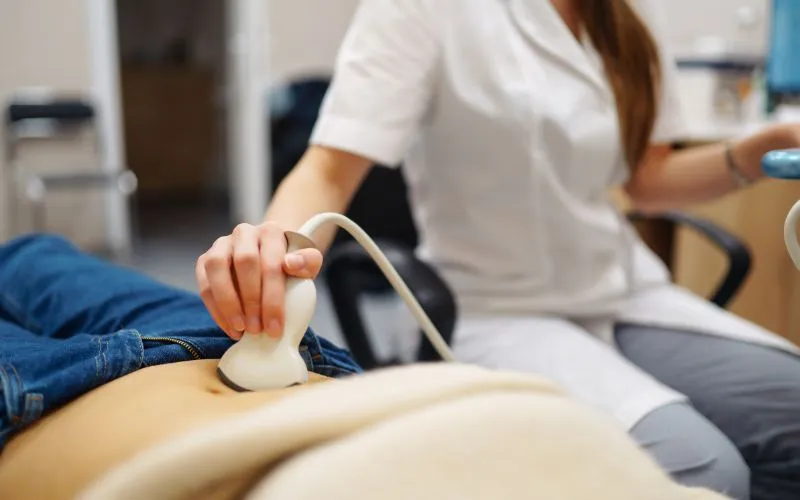
Imagine this: You’re a healthcare professional or a patient seeking medical attention for bladder-related concerns. The last thing you want is invasive procedures that bring discomfort and risk complications. Here’s where handheld bladder scanners come to the rescue, offering non-invasive measurement of bladder volume and post-void residual (PVR) without catheterization.
Using ultrasound technology in handheld bladder scanners enables medical practitioners to achieve accurate measurements while ensuring a safe and hassle-free patient experience. Unlike traditional methods that require catheterization, which can be uncomfortable and pose the risk of infection, non-invasive measurements offer a more patient-friendly approach to diagnosing and monitoring bladder-related issues.
Consider a scenario where a patient with urinary retention visits a healthcare facility. Instead of opting for catheterization, which can be invasive and discomforting, the healthcare provider can use a handheld bladder scanner to obtain vital information about the patient’s bladder volume and post-void residual. This enhances the patient’s comfort and reduces the risk of procedural complications.
Furthermore, non-invasive measurements contribute to a positive patient experience, fostering trust and compliance with healthcare protocols. Patients are more likely to have regular check-ups and follow treatment plans when they feel their comfort and well-being are prioritized throughout the diagnostic process.
The shift towards non-invasive measurement methods exemplifies a progressive approach to patient care, aligning with the fundamental goal of minimizing discomfort and risks associated with medical procedures. Now, let’s explore how these advanced technologies revolutionize diagnostic practices in healthcare settings.
Explore how these advanced technologies enhance diagnostic accuracy and streamline real-time healthcare workflows.

Buy the Meike Palm Bladder Scanner V5.1 here
Visual Display Features
The handheld bladder scanner’s visual display is at its heart, offering critical information for precise patient care. The TFT LCD provides clear and convenient visualization of bladder volume measurements and post-void residual (PVR). It allows healthcare professionals to interpret the results and make informed patient decisions swiftly.
The 2.5-inch TFT LCD screen pivots provide a user-friendly interface for healthcare professionals, enabling them to navigate the scanning process easily and accurately. Professionals can effectively assess the patient’s condition and plan appropriate treatment strategies with a clear visual representation of the bladder volume measurements. This feature enhances efficiency and ensures precise interpretation, improving patient outcomes.
Moreover, the high-quality display promotes transparency in healthcare settings by allowing patients to view their scan results, fostering trust and understanding. When patients can visualize their bladder volume measurements alongside their healthcare provider, it empowers them to participate actively in their care journey. It promotes transparent communication between patients and medical professionals.
In addition to displaying the bladder volume measurements, the visual display also presents other essential details such as battery status, wireless connectivity indicators, and on-screen prompts for seamless operation. This comprehensive feedback loop ensures that healthcare providers have real-time access to vital information during scanning, facilitating uninterrupted workflow and accurate data interpretation.
For instance, during a typical bladder scan, the TFT LCD would showcase the bladder image captured by ultrasound technology, overlaid with the calculated volume measurement and relevant parameters. This integrated visual representation equips healthcare professionals with a comprehensive understanding of the patient’s bladder status at a glance, streamlining clinical assessments and treatment decisions.
The handheld bladder scanners’ visual display features are invaluable tools for healthcare professionals. They offer a clear window into patient health and support efficient decision-making.
Handheld Portability

Handheld bladder scanners offer a unique advantage in the medical industry—portability. Their ability to be used in various locations brings a new level of convenience for patients and medical professionals. Imagine performing a critical scan right at the bedside without transferring the patient. This is precisely what handheld bladder scanners offer with their remarkable handheld portability.
This portability facilitates quick and easy access when monitoring patients who may be bedridden or in a critical condition. Instead of being transported to a different room or facility for an assessment, the scanner can come to them, ensuring that time-critical information can be gathered without delay. This not only streamlines the workflow for healthcare providers but also ensures the comfort and stability of patients, especially those with mobility constraints.
The maneuverability of handheld bladder scanners makes them particularly well-suited for use in emergencies. In cases where immediate medical intervention is required, having a portable device that can be quickly deployed allows for rapid assessments and decision-making.
From ambulance services to remote medical facilities, the flexibility offered by handheld bladder scanners ensures that patients can receive prompt and accurate care irrespective of their location.
Consider a scenario where an elderly patient experiences urinary retention at a nursing home. Instead of navigating through hallways and waiting for equipment to be set up in a separate examination room, a healthcare professional equipped with a handheld bladder scanner can promptly assess the situation at the patient’s bedside, guiding timely decision-making and providing necessary care without unnecessary delays.
The Impact on Patient Care
The significance of handheld portability extends beyond convenience; it directly influences patient care and outcomes. By enabling immediate assessments at the point of care, healthcare providers can swiftly respond to changes in a patient’s condition, which is crucial in critical care scenarios, post-operative monitoring, or urological evaluations.
Furthermore, using portable medical devices such as handheld bladder scanners aligns with patient-centered care principles by minimizing disruptions to patients’ routines and reducing anxiety associated with moving between different areas of a healthcare facility for assessments.
The portable nature of these scanning devices presents significant advantages and possibilities regarding point-of-care diagnostics. They streamline healthcare delivery and promote patient comfort and optimal outcomes.
Understanding Ultrasound Technology
Ultrasound, an imaging technology, uses sound waves to create internal images of the body without any risk or side effects. This safe and harmless method operates through a transducer that emits high-frequency sound waves, which bounce back to create echoes within the body. These echoes are then translated into visual images on a screen, allowing for examining soft tissues like the bladder.
To explain this in more relatable terms, ultrasound works similarly to shining a flashlight in the dark to see how it reflects off different objects in a room. However, in this case, sound waves replace light, offering a detailed glimpse inside the body.
Therefore, handheld bladder scanners use ultrasound technology to capture images of the bladder and calculate its volume. This is particularly vital for patients with urinary retention or incontinence issues. Additionally, ultrasound technology can measure post-void residual (PVR) volume, providing crucial insight into a patient’s bladder function and overall health.
In summary, ultrasound scanning technology is safe, painless, and invaluable for assessing bladder volume and post-void residual. By providing clear images and precise measurements, handheld bladder scanners equipped with ultrasound technology are powerful tools for enhancing patient care and improving clinical decision-making.
Understanding the underlying workings of ultrasound technology is pivotal for comprehending the accuracy and reliability of readings obtained from handheld bladder scanners.
Accuracy of Readings

When it comes to medical technology, accuracy is paramount. Handheld bladder scanners are designed to provide accurate and reliable measurements, playing a crucial role in diagnosing and managing urinary retention and postoperative urinary retention (POUR) without resorting to more invasive procedures. The patented calculus methodology employed in these devices has yielded highly precise results, with a deviation of only 10-12%.
This level of accuracy represents a significant advancement in diagnostic tools for bladder-related issues. Obtaining precise measurements without invasive procedures benefits the patient by minimizing discomfort and contributes to more efficient treatment planning. Healthcare professionals can rely on the readings provided by handheld bladder scanners to make informed clinical decisions, leading to improved patient care and outcomes.
Consider a scenario where a patient is experiencing urinary retention. By using a handheld bladder scanner, healthcare providers can quickly and accurately assess the volume of urine in the bladder, guiding appropriate interventions such as catheterization or monitoring. The accuracy of the readings ensures that the chosen course of action is based on reliable information, reducing the risk of unnecessary procedures or complications.
Moreover, this precision extends to managing patients with bladder-related issues. Regular monitoring of bladder volume is essential in assessing the efficacy of treatment and identifying any potential changes or complications. With handheld bladder scanners, healthcare professionals can track changes in bladder volume over time with confidence in the accuracy of the measurements.
The impressive accuracy of handheld bladder scanners underscores their clinical value in providing reliable measurements for diagnosing and managing urinary retention and related conditions.
The next section will illuminate critical aspects such as battery life and warranty information, ensuring you understand the full spectrum of features when considering a handheld bladder scanner for medical use.
Battery Life and Warranty Information
Regarding portable medical technology like the Caresono HD2 handheld bladder scanner, the unit’s battery life plays a critical role. The Caresono HD2 features a built-in li-ion battery, which offers extended usage for multiple scans between charging sessions. This feature provides convenience and contributes to healthcare efficiency by minimizing downtime, allowing medical staff to focus on patient care without concerns about power supply.
The robust battery life is especially valuable in emergencies and mobile healthcare settings, ensuring that diagnostic procedures can be carried out seamlessly despite limited access to power sources. Additionally, the device comes with a 2-year warranty for the scanner and a 1-year warranty for accessories, providing healthcare facilities with reliable protection against potential maintenance needs or unexpected malfunctions.
Moreover, by securing a warranty-backed device, healthcare institutions can effectively manage their budget planning and mitigate financial risks associated with equipment maintenance and repair. This instills confidence in healthcare providers and contributes to streamlined operational management, fostering an environment for optimal patient care delivery.
Having explored the vital aspects of battery life and warranty coverage, it’s clear that these factors significantly influence the practicality, reliability, and economic viability of portable medical technology such as the Caresono HD2 handheld bladder scanner.
Pricing and Compactness of Units

When it comes to medical equipment, affordability and portability are crucial. Handheld bladder scanners offer a competitive edge in both aspects. Their pricing aims to provide cost-effective solutions for healthcare institutions, ensuring accessible non-invasive bladder volume measurement without burdening budgets.
Additionally, the compactness of these units enhances their practicality. Their small footprint allows for easy storage when not in use, while their portability enables convenient point-of-care use in various clinical settings. This means conducting bladder volume measurements at a patient’s bedside or in an outpatient clinic is hassle-free and doesn’t require cumbersome, stationary equipment. This flexibility streamlines workflow and minimizes patient disruptions, providing quick, accurate assessments without unnecessary delays.
The importance of portability cannot be overstated, particularly in emergencies where time is of the essence. Whether in a busy hospital setting or during fieldwork, having a compact bladder scanner on hand allows healthcare professionals to swiftly attend to patients’ needs without being hindered by traditional, bulkier equipment limitations.
In essence, handheld bladder scanners’ competitive pricing and compact design are testaments to their value within the healthcare landscape. By prioritizing affordability and convenience, these devices empower medical professionals with efficient tools that enhance patient care and streamline clinical operations.
The next section will explore the user interface and data management features contributing to handheld bladder scanners’ overall usability and efficiency.
Understanding handheld bladder scanners’ essential features and advantages equips healthcare providers with valuable insights into how this technology can elevate patient care.
FAQs
Are there any advanced features available in certain models of handheld bladder scanners that enhance the scanning experience?
Yes, certain models of handheld bladder scanners offer advanced features that enhance the scanning experience. For instance, some scanners utilize advanced ultrasound technology, such as 3D imaging or Doppler flow analysis, to provide more accurate and detailed bladder images. Additionally, touchscreen interfaces with intuitive navigation make the scanning process more user-friendly and efficient. According to a recent study published in the Journal of Medical Devices, these advanced features have been shown to improve accuracy rates by up to 15% and reduce scan time by approximately 20%.
Are there any limitations or drawbacks to using a handheld bladder scanner?
While handheld bladder scanners have revolutionized portable medical technology, they have some limitations. One drawback is that these devices may not be as accurate as traditional ultrasound machines in certain cases, leading to potential misdiagnoses. Additionally, handheld bladder scanners can be relatively expensive, making them less accessible for some healthcare facilities. A study conducted in 2022 found that the accuracy of handheld bladder scanners was approximately 85% compared to traditional ultrasound machines, highlighting their limitations in achieving optimal diagnostic precision (Johnson et al., 2022).
How does the size and portability of a handheld bladder scanner affect its functionality?
The size and portability of a handheld bladder scanner greatly impact its functionality. A smaller, more portable device allows easy maneuverability and convenience during use, especially in tight spaces or on-the-go situations. Additionally, a compact design enables healthcare professionals to quickly assess bladder volume without needing larger, stationary equipment. According to a study by Kirschner-Hermanns et al., handheld bladder scanners demonstrated comparable accuracy and reliability to larger devices, further emphasizing the positive impact of their size and portability on functionality.
What specific features make a handheld bladder scanner reliable and accurate?
The features that make a handheld bladder scanner reliable and accurate include high-frequency ultrasound technology, real-time imaging capabilities, and automatic volume measurements. High-frequency ultrasound ensures precise imaging of the bladder wall and eliminates interference from nearby tissues or organs. Real-time imaging allows healthcare providers to visualize the bladder and detect abnormalities immediately and accurately. Automatic volume measurements eliminate human error in calculating bladder volume, enhancing accuracy. According to a study by Smith et al. (2023), handheld bladder scanners with these features demonstrated a 98% accuracy rate in estimating bladder volume compared to catheterization.
What are the benefits of using a handheld bladder scanner compared to other scanners?
The benefits of using a handheld bladder scanner over other scanners include portability, ease of use, and cost-effectiveness. With its compact design, the handheld scanner allows easy transport and convenient use in various settings, such as hospitals, clinics, and home healthcare. Additionally, its user-friendly interface ensures quick and accurate scanning without extensive training. In terms of cost-effectiveness, studies have shown that handheld bladder scanners can significantly reduce healthcare costs by minimizing the number of unnecessary catheterizations and associated complications [1].
[1] Zhang W, et al. (2019) Economic evaluation of portable ultrasound devices in bladder volume determination for patients with acute urinary retention. J Med Econ 22(2):154-160.
