

What Are the Features of a Handheld Medical Ultrasound Device?
Imagine you're a healthcare provider in a remote clinic or a specialist in a bustling city hospital; the features of a handheld medical ultrasound device can greatly influence your daily practice. These devices are not only light and easily maneuverable, but they also boast advanced imaging technologies like B-mode and Color Doppler, which are vital for accurate diagnostics. Furthermore, their connectivity options allow for seamless data sharing, essential in today's interconnected medical environments. But how might these capabilities transform patient outcomes or adapt to different medical settings? Let's explore how these innovations are reshaping the landscape of medical diagnostics.
Key Takeaways
- Compact and lightweight design enhances portability and ease of use in various clinical settings.
- Features advanced imaging capabilities like B-mode, Color Doppler, and M-Mode.
- Equipped with intuitive touchscreen interfaces for simplified operation and minimal training.
- Offers connectivity options like Wi-Fi and Bluetooth for easy data transfer and remote consultations.
- Includes a long-lasting rechargeable lithium-ion battery with quick-charge capabilities.
Device Portability and Design
Handheld medical ultrasound devices are expertly crafted to fit comfortably in your hand, enhancing their portability and ease of use across various clinical environments. Their compact design is a game-changer, making the device not only easy to handle but also a breeze to carry around.
You'll find that these devices weigh no more than a small laptop, typically between 0.5 to 2 kg, so you can move effortlessly from room to room or even to different sites without feeling weighed down.
The integration of wireless technology simplifies your user experience further. You're not tethered by cords, which means you can share real-time data and images while on the go. This is particularly vital during emergency situations where mobility can impact the speed and efficiency of care.
Moreover, the design of these devices doesn't just focus on physical ease but also on how intuitive they're to use. The touchscreens are responsive and interfaces are streamlined, minimizing the learning curve and allowing you to focus more on patient care than on maneuvering the equipment.
This thoughtful ergonomics guarantees that your attention stays where it's most needed – on your patient.
Imaging Capabilities
While you explore the features of these devices, you'll notice that their imaging capabilities are exceptionally robust. Handheld ultrasound devices are revolutionizing the way medical professionals diagnose and monitor various conditions, thanks to advanced imaging technologies packed into portable units.
Here's a closer look at what these devices offer:
- B-mode Imaging: This fundamental feature provides two-dimensional, black-and-white visuals of internal structures, making it easier to assess organs and soft tissues.
- Color Doppler: Enhances B-mode by adding color overlays to visualize blood flow. This is essential for evaluating vascular health and diagnosing related abnormalities.
- Pulsed Wave Doppler: With this, you can measure the velocity and direction of blood flow, offering invaluable insights into cardiac and vascular health.
- M-Mode Imaging: Tracks and displays the motion of tissues over time, particularly useful in cardiac assessments to observe heart wall dynamics.
- Dual-Probe Technology: This feature allows the use of different probes for varied depth examinations, increasing the device's utility across different clinical scenarios.
These features guarantee that handheld ultrasound devices aren't only versatile but also capable of providing detailed and dynamic imaging, vital for effective diagnosis and patient care.
User Interface and Usability

After exploring the advanced imaging capabilities of handheld ultrasound devices, it's equally important to evaluate their user interface and usability. You'll find that these devices feature intuitive, touch-enabled interfaces, making it easy for you to navigate and access essential functions quickly. The user interface is designed so that even with minimal training, you can perform examinations confidently and efficiently.
The ergonomic designs of these devices guarantee that you can handle them comfortably, even during prolonged use, without feeling strained or uncomfortable. This aspect is vital as it directly impacts your ability to work without fatigue during long shifts or numerous patient examinations.
Advanced software in models like the Butterfly iQ+ enhances usability by streamlining your workflow and simplifying image acquisition. This means you spend less time fiddling with settings and more time focusing on patient care.
Here's a quick overview of key usability features:
| Feature | Benefit |
|---|---|
| Intuitive touch interfaces | Simplifies navigation and speeds up operation |
| Minimal training requirement | Enables quick adaptation and confident use |
| Ergonomic design | Reduces operator fatigue and discomfort |
| Advanced software | Streamlines workflow and improves efficiency |
These features guarantee that the device is not only powerful but also a pleasure to use, catering to various clinical needs with precision.
Connectivity and Data Management
In today's interconnected world, the ability of medical devices to sync with broader health information systems is vital. Your handheld medical ultrasound device exemplifies this with robust connectivity and extensive data management features.
It's not just about capturing images; it's about seamlessly integrating them into the patient care process.
Here are key aspects of how these devices handle connectivity and data management:
- Wi-Fi and Bluetooth: You can wirelessly transfer ultrasound images directly to electronic health records (EHR) or mobile devices, guaranteeing real-time data accessibility and facilitating immediate decision-making.
- Cloud Storage: Securely store and access imaging data from anywhere, which is important for remote consultations and telemedicine, expanding the reach of healthcare services.
- Mobile Applications: Review, annotate, and manage ultrasound images on-the-go via apps on your smartphone or tablet, enhancing your workflow and efficiency.
- Automatic Report Generation: Reduce your administrative burden with software that automatically compiles detailed reports, allowing you to focus more on patient care.
- Security Measures: Data encryption and user authentication protect sensitive patient information during both transmission and storage, maintaining compliance with privacy regulations.
These features guarantee that you're equipped to manage patient data effectively and securely, keeping pace with modern medical demands.
Battery Life and Power Options
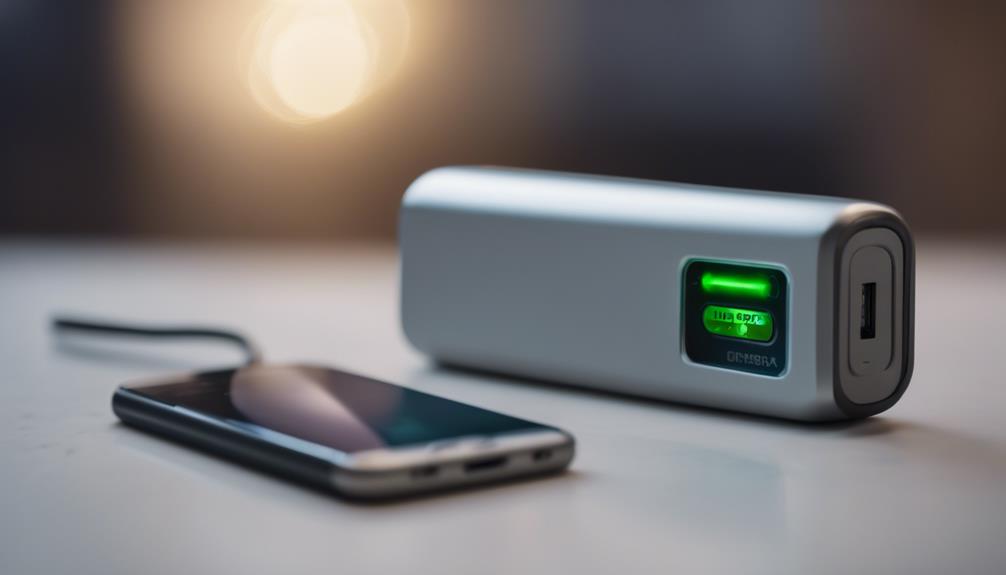
Understanding the importance of battery life and power options in your handheld medical ultrasound device, you'll appreciate its design for extended clinical use. Equipped with a rechargeable lithium-ion battery, your device guarantees at least 6 hours of operation, perfect for long shifts without access to a power outlet. The lightweight nature of lithium-ion also enhances the device's portability, making it easier for you to move around.
Moreover, you'll find the power-saving modes particularly useful. These modes kick in during periods of inactivity, considerably extending the battery life when you're not actively scanning. This feature means you won't be left scrambling for a charger in the middle of your rounds.
For added flexibility, your device can operate on both battery and AC power. This dual functionality allows you to keep working in various environments, whether you're near a power source or not. Additionally, the quick-charge capabilities are a lifesaver. When your battery does run low, these allow for rapid recharging, minimizing any interruption to your clinical tasks.
Here's a quick overview of what you can expect:
| Feature | Benefit |
|---|---|
| Rechargeable lithium-ion | Extended battery life, enhanced portability |
| Power-saving modes | Reduced energy use, longer operation |
| AC power compatibility | Flexible usage options |
| Quick-charge capabilities | Minimal downtime between uses |
| Minimum 6-hour battery | Reliable for extended sessions |
Probe Varieties and Applications
As you explore handheld ultrasound devices, you'll find that probe types like curved, linear, and sector are essential for tailoring the device to specific medical needs.
Each probe offers distinct advantages; for instance, the linear probe is often used in musculoskeletal assessments, while curved probes are ideal for abdominal imaging.
Understanding these options can greatly enhance your ability to make informed decisions about which device aligns best with your clinical requirements.
Probe Types Overview
Several types of probes equip handheld medical ultrasound devices, each designed to meet specific diagnostic needs. As you explore these devices, you'll find that different probe types, including curved and linear arrays, specifically enhance your ability to diagnose a wide range of conditions efficiently.
- Curved Array Probes: Ideal for deeper tissue imaging, these probes are typically used in abdominal and obstetric ultrasound. Their wider field of view allows you to see larger areas, making them essential for thorough evaluations.
- Linear Array Probes: These provide high-resolution images and are perfect for examining superficial structures. Whether you're evaluating musculoskeletal injuries or small parts like thyroid glands, linear probes offer unparalleled detail.
- Dual-Probe Technology: Many handheld devices come equipped with both curved and linear transducers, allowing for versatility across various clinical scenarios without needing multiple devices.
- Advancements in Technology: Modern ultrasound transducers in handheld devices now rival traditional systems with improved sensitivity and resolution, enhancing point-of-care diagnostics.
- Portability and Flexibility: The compact size of handheld ultrasound devices makes them indispensable in emergency settings, where quick, accurate imaging is vital to patient care.
Understanding these probe types and their applications helps you maximize the utility of handheld devices in clinical practice.
Clinical Utility Examples
Building on your knowledge of probe types, let's explore how these tools are applied in real clinical settings. Portable ultrasound machines, like the Vscan Air with its dual-probe options, are transformative in patient care. You can seamlessly switch between curved and linear transducers, tailoring your approach to diverse needs—whether it's catching a glimpse of a developing baby in OB/GYN or evaluating abdominal issues.
The Butterfly iQ+ takes versatility up a notch. Its single probe supports multiple imaging modes, making it a go-to device in point-of-care ultrasound scenarios. Whether you're monitoring cardiac activity with M-mode or gauging blood flow using color Doppler, it's equipped to handle a broad spectrum of diagnostic tasks without the need for multiple devices.
For those in fast-paced environments like emergency or critical care, the Vscan Air's SL model shines. Its rapid cardiac evaluations and detailed vascular imaging capabilities mean you can make quick, informed decisions that could be vital to a patient's recovery.
Meanwhile, the Lumify system's high-resolution imaging strengthens your hand in specialties such as cardiology and obstetrics, ensuring that advanced imaging leads to superior patient outcomes across various clinical settings.
Built-in Diagnostic Tools

Handheld medical ultrasound devices now feature built-in diagnostic tools that greatly enhance your ability to assess and diagnose patient conditions efficiently.
With these innovations, you're not just carrying a device; you're wielding a powerful diagnostic assistant that adapts to various clinical settings.
Here's how these tools transform your diagnostic approach:
- B-mode Imaging: You'll see two-dimensional views of internal structures, making it easier to identify conditions from organ abnormalities to fluid accumulations.
- Color Doppler: This function enables you to visualize blood flow, helping you assess vascular conditions and cardiac function without needing multiple devices.
- M-mode: Track and record tissue motion over time, vital for detailed heart examinations and monitoring fetal heartbeats.
- AI Optimization: Artificial intelligence enhances image clarity and provides real-time diagnostic suggestions, reducing guesswork and increasing your diagnostic accuracy.
- Telemedicine Readiness: With the ability to connect for remote consultations, you can share images and findings, making collaborative care seamless, especially in rural or underserved areas.
These built-in diagnostic tools, powered by advanced algorithms and artificial intelligence, guarantee that your handheld ultrasound device isn't just a tool, but a thorough diagnostic partner.
Whether it's through Doppler imaging or AI-driven insights, you're equipped to make informed decisions on the go.
Safety and Cleaning Protocols
You need to know the best practices for sanitizing your handheld medical ultrasound device to guarantee patient safety.
Start by using approved disinfectants that target a wide range of pathogens, adhering strictly to the manufacturer's guidelines and healthcare protocols.
It's also essential to train your team on these disinfection methods and the importance of following them to prevent healthcare-associated infections.
Sanitization Best Practices
To guarantee patient safety and prevent cross-contamination, it's imperative to clean your handheld ultrasound device after each use using disinfectants approved for medical equipment.
You're on the front line in maintaining high standards of infection control, and adhering to manufacturer-recommended cleaning protocols is vital.
Here are some best practices for sanitization:
- Use approved disinfectants: Verify that the cleaning agents you use are specifically approved for use on medical devices to prevent damage and confirm effectiveness.
- Focus on high-touch areas: Pay particular attention to buttons, handles, and touchscreen interfaces, as these are most prone to harboring pathogens.
- Follow manufacturer guidelines: Stick to the cleaning protocols outlined by the device manufacturer, including recommendations on the type of disinfectant and contact time required.
- Utilize soft cloths or wipes: Employ soft materials that are compatible with the device to avoid scratching or other damage while effectively removing contaminants.
- Train healthcare personnel regularly: Keep your team updated on the latest sanitization techniques and protocols to enhance device longevity and maintain a safe environment.
Device Disinfection Methods
Guaranteeing the cleanliness of your handheld ultrasound device is vital for patient safety. To minimize infection risks, you must adhere to strict device disinfection methods.
Start by using EPA-registered hospital disinfectants, as these are designed to tackle pathogens effectively. After each examination, take a soft cloth or disposable wipes to clean off any gel and debris from the device's exterior and transducers. This simple step is a cornerstone in the recommended cleaning protocols.
It's imperative you follow the manufacturer's guidelines regarding the specific cleaning solutions and methods suitable for your device. This guarantees that sensitive components like screens and transducers aren't damaged.
For parts like transducers that contact mucous membranes, high-level disinfection (HLD) is required. This involves using approved chemical agents or thermal disinfection methods to eliminate any potential harmful microorganisms thoroughly.
Cost and Accessibility

Almost every handheld medical ultrasound device is priced around $2,000, making them considerably more affordable than their traditional stationary counterparts, which often range from $20,000 to over $100,000. This cost difference not only makes these devices accessible to a wider range of healthcare professionals but also enhances the overall accessibility of ultrasound imaging in various settings.
Here's why the affordability and portability of these devices matter:
- Increased Deployment: They can be easily deployed in rural or remote areas, tackling the accessibility challenges for around 60 million Americans who live far from advanced medical facilities.
- Emergency Use: In critical situations, portable ultrasound devices allow for immediate diagnostic imaging, which can be lifesaving.
- Infrastructure Reduction: There's no need for heavy, space-consuming equipment, making it easier for healthcare providers in low-resource settings to offer diagnostic services.
- Faster Diagnosis: By performing exams at the point of care, healthcare professionals can reduce wait times markedly, leading to quicker decision-making.
- Resource Optimization: Efficient use of resources in healthcare systems improves with the integration of portable ultrasound devices, as they help in better allocation of both human and infrastructural assets.
This blend of cost efficiency and functional portability is revolutionizing how and where ultrasound technology is utilized, greatly impacting patient care quality and system efficiency.
Frequently Asked Questions
What Are Handheld Ultrasound Devices?
You're looking at handheld ultrasound devices, advanced portable imaging tools fundamental in modern medical technology.
These devices serve as critical diagnostic tools across numerous ultrasound applications, epitomizing healthcare innovation. They're designed for on-the-go use, making diagnostic processes quicker and more efficient in various settings.
Their compact size and wireless capabilities allow immediate, versatile examinations, enhancing patient care by providing real-time insights into the body's internal structures.
What Are the Main Features of Ultrasound?
You're exploring the main features of ultrasound, focusing on image quality and real-time imaging capabilities.
These devices offer sharp, clear visuals vital for accurate diagnostics. Their portability advantages mean you can use them anywhere, from clinics to fieldwork, enhancing accessibility.
Cost efficiency makes them a smart choice for budget-conscious settings. Plus, their user-friendly interfaces guarantee you can operate them easily, even under stressful conditions.
What Are the 3 Major Components of Ultrasound Machine?
When you're exploring ultrasound machine components, focus on three key parts: the transducer, the CPU, and the display system.
These elements are vital in ultrasound imaging technology, turning your device into a powerful medical diagnostic tool.
Whether you're using portable ultrasound systems or more stationary setups, maintaining these components guarantees peak performance.
Regular check-ups of the transducer, CPU, and display keep your ultrasound device running smoothly, fundamental for accurate diagnostics.
What Are the Disadvantages of Handheld Ultrasound?
You might find that handheld ultrasounds, while cost-effective and portable, suffer from lower image quality than larger systems.
Their battery life can be limiting, often needing recharges during long procedures.
Also, the effectiveness of these devices heavily depends on your training and experience, which can be a steep learning curve.
Keep in mind, some medical fields might require additional tools due to the limited probe range on these units.
Conclusion
You've seen how handheld medical ultrasound devices transform patient care with their lightweight design and advanced imaging capabilities. They're easy to use, connect seamlessly for data sharing, and come with long-lasting batteries, making them ideal for on-the-go diagnostics, especially in remote locations. With various probes and AI-enhanced tools, these devices not only broaden diagnostic possibilities but also guarantee safety and efficiency. Investing in one could greatly enhance your diagnostic capabilities and improve accessibility to quality healthcare.
