
Why Choose a Digital Bladder Scanner?
Have you ever considered the impact of using a digital bladder scanner in your medical practice? These devices not only streamline the process of measuring bladder volume but also considerably decrease the discomfort and potential risks associated with traditional catheterization. By opting for this advanced technology, you're embracing a tool that enhances patient safety and improves diagnostic accuracy. But beyond these apparent benefits, there's a broader implication for overall healthcare efficiency that might surprise you. What could this mean for your practice's future, and how might it shift the standards of patient care? Let's explore.
Key Takeaways
- Non-invasive and reduces discomfort compared to catheterization, enhancing patient comfort.
- Provides accurate and immediate bladder volume assessments, improving clinical decision-making.
- Lowers the risk of catheter-associated urinary tract infections, enhancing patient safety.
- Cost-effective by decreasing the need for catheters and reducing UTI treatment expenses.
- Features user-friendly technology with easy integration into clinical workflows, saving time and resources.
Advanced Imaging Technology
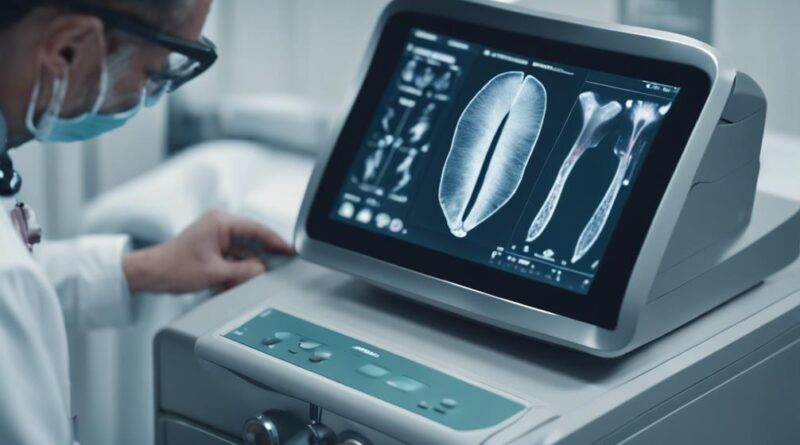
Digital bladder scanners leverage cutting-edge ultrasound technology to deliver precise real-time 3D images of your bladder's volume. These devices utilize advanced imaging algorithms to achieve accurate measurement of postvoid residual (PVR), essential for evaluating urinary function.
You'll find that this technology, by minimizing human error, greatly enhances diagnostic reliability, especially in tricky cases like pelvic organ prolapse where traditional methods often fall short.
Moreover, the accuracy of these bladder scanners is supported by evidence showing a mere 1.37 mL mean difference from catheterization measurements. Such precision guarantees you're getting reliable data to base your medical decisions on. This is particularly critical in preventing unnecessary interventions, such as catheterizations that often lead to urinary tract infections (UTIs).
By using a bladder scanner, you're not just getting a snapshot of bladder volume; you're also markedly reducing the risk of catheter-associated UTIs (CAUTIs). Studies indicate that implementing bladder scanners can cut UTI rates by half.
This technology doesn't just safeguard your health from infections; it streamlines clinical workflows too. Automated calculations of bladder volume save precious time, allowing healthcare providers to focus more on patient care rather than manual measurements.
Enhancing Patient Comfort
Eliminating the need for invasive procedures, digital bladder scanners greatly enhance your comfort during medical assessments. By employing non-invasive technology, these devices sidestep the discomfort and anxiety linked with traditional catheterization methods, improving your overall experience.
Imagine undergoing urinary evaluations without the dread of invasive tools; that's what a bladder scanner offers.
The real-time visualization capabilities of digital bladder scanners also contribute considerably to enhancing patient comfort. You won't have to endure long waiting periods for results. The immediate assessments mean quicker answers and fewer moments of uncertainty about your health status.
Additionally, the portability of these devices guarantees that you can remain in the comfort of your bed during the procedure, minimizing movement and making the process smoother and less intimidating.
Moreover, the accuracy of automated bladder volume calculations eliminates the guesswork and reduces the likelihood of unnecessary catheter placements. This precision not only spares you from potential discomfort but also boosts your confidence in the care you're receiving.
Reducing Infection Risks

You'll find that using digital bladder scanners greatly minimizes the risk of catheter-associated urinary tract infections by reducing the need for catheterization.
By enhancing sterile procedures, these devices also decrease the chances of introducing pathogens during invasive interventions.
Consequently, you're not only ensuring more accurate care but also protecting patients from unnecessary infections.
Minimizing Catheter-Associated UTIs
How can healthcare professionals markedly lower the risk of catheter-associated urinary tract infections (CAUTIs)? The key lies in leveraging the capabilities of a digital bladder scanner. This innovative tool plays a vital role in reducing urinary tract infections by minimizing the need for invasive catheters.
Here's how a bladder scanner makes a difference:
- Accurate Measurement of PVR Volume: The scanner provides precise readings of postvoid residual (PVR) volume, identifying patients who genuinely need catheterization and those who don't. This precision drastically cuts down unnecessary catheter use, a primary source of infection.
- Real-Time Assessments: By continuously monitoring bladder volumes, you're equipped to make informed decisions on the spot. This prevents the premature or unnecessary placement of catheters, further reducing the risk of infection.
- Proven Effectiveness: Studies have shown that using a bladder scanner can halve the occurrences of UTIs in postoperative settings. One particular study highlighted an odds ratio of 0.27 for CAUTIs, indicating a significant reduction when ultrasound technology is employed.
Enhancing Sterile Procedures
Digital bladder scanners greatly improve sterile procedures, effectively reducing infection risks associated with traditional catheterization methods. Using a bladder scanner, you're opting for a non-invasive approach to assess bladder volume, steering clear of the pathways that often lead to urinary tract infections (UTIs). By bypassing the need for catheter insertion, you minimize patient discomfort and considerably cut down the risk of introducing pathogens into the urinary tract.
These devices not only support a sterile environment but also guarantee quick and accurate bladder volume measurements. This efficiency aids clinicians in making informed decisions swiftly, thereby further diminishing the likelihood of infection due to delayed or improper interventions.
Here's a quick overview in a table format to underscore the advantages:
| Feature | Benefit | Impact on Sterility |
|---|---|---|
| Non-invasive technology | Eliminates need for catheterization | Reduces risk of introducing infections |
| Quick measurement | Facilitates timely decision-making | Minimizes duration of exposure to potential contaminants |
| Accurate volume assessment | Prevents unnecessary procedures | Decreases risk of complications |
| Recommended by health organizations | Endorsed as best practice | Supports widespread adoption of sterile techniques |
Embrace the bladder scanner to safeguard against UTIs, streamline assessments, and uphold the highest standards of patient care.
Decreasing Invasive Interventions
Invasive procedures, like traditional catheterizations, often heighten the risk of urinary tract infections because they introduce pathogens directly into the urinary tract.
However, by integrating a digital bladder scanner into your practice, you're stepping into a domain of medical care that prioritizes both efficiency and patient safety. This advanced tool markedly diminishes the need for urinary catheterization, curtailing the likelihood of urinary tract infections.
Using a digital bladder scanner offers substantial benefits:
- Immediate Accuracy: Ultrasound bladder scanners provide accurate postvoid residual (PVR) measurements, enabling timely and precise interventions.
- Reduced Infection Risks: Studies indicate up to a 50% reduction in UTI occurrences compared to traditional methods.
- Enhanced Patient Comfort: The noninvasive nature of bladder scanning minimizes physical and psychological discomfort associated with catheterization.
Cost-Effectiveness Analysis
By adopting digital bladder scanners, healthcare facilities can drastically cut costs associated with traditional catheterizations. The cost-effectiveness of bladder scanners is evident as they considerably reduce urinary tract infections (UTIs) stemming from catheterization. This not only spares your facility the heavy medical expenses linked to treating these infections but also the associated labor costs.
A bladder scanner guarantees quick and accurate assessments of bladder volume, which means you're not spending unnecessary time and resources on invasive catheterizations. The reduced frequency of catheter use directly lowers the risk of catheter-associated UTIs (CAUTIs), which a meta-analysis has shown can drop by up to 50%. This dramatic reduction in infection rates contributes to substantial savings on the treatment and management of UTIs.
The initial investment in a bladder scanner might seem substantial, but it's quickly offset by the savings from decreased labor costs and minimized complications.
Additionally, studies indicate that implementing bladder scanners can enhance patient throughput, increasing efficiency and, consequently, revenue generation. You'll also see a decrease in the overall length of hospital stays, thanks to improved bladder management, leading to further savings in operational costs.
Adopting this technology guarantees you're not just saving money but also elevating patient care.
Training and Usability
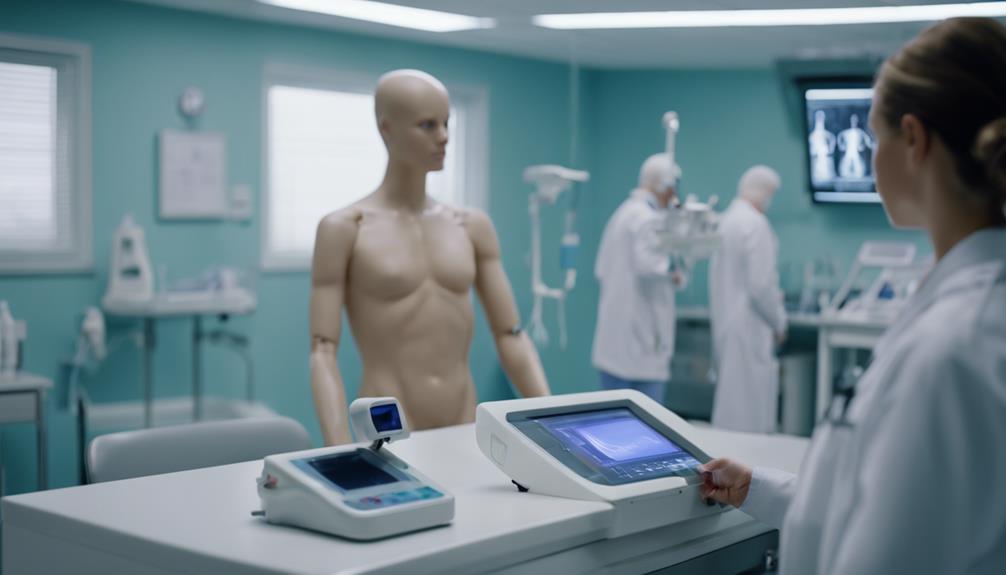
When you start using a digital bladder scanner like the iQ+ Bladder, you'll find its ease of operation immediately apparent.
The device comes with effective training protocols, including intuitive tutorials and the ScanLab app, to help you master its use quickly.
These resources are designed to guarantee you can integrate this technology smoothly into your daily clinical practice.
Ease of Operation
Digital bladder scanners, such as the iQ+ Bladder, are designed with ease of use in mind. When you're in a fast-paced healthcare environment, you need tools that don't slow you down. That's where the intuitive features of these scanners play a pivotal role.
Firstly, the user-friendly software interface of the iQ+ Bladder means you're up and running with no complex setups. You don't need a lengthy login process or tedious configurations. It's all about plug-and-play simplicity that fits seamlessly into your daily routine.
Additionally, this portable ultrasound device is engineered for durability, standing up to the rigors of frequent use without compromising performance.
Here's how the iQ+ Bladder guarantees ease of operation:
- User Guidance: Integrated walkthroughs aid in accurate probe placement, helping you get reliable results quickly, even if you're relatively new to using a bladder scanner.
- Automated Calculations: With automatic bladder volume measurements and 3D visualizations, you can interpret ultrasound data effortlessly, minimizing the need for advanced training.
- Supportive Training Resources: A variety of training materials, including online tutorials and the ScanLab app, are readily available to enhance your proficiency and confidence in using the device.
These features make the iQ+ Bladder an ideal choice for healthcare settings where ease of use is as important as accuracy.
Effective Training Protocols
Building on the ease of operation highlighted by tools like the iQ+ Bladder, effective training protocols are equally important to guarantee medical professionals can utilize these devices with precision and confidence. You'll find that incorporating hands-on demonstrations and practice sessions is essential. These practical experiences help you accurately position the bladder scanner and interpret results with confidence, making certain patient care is both effective and efficient.
Online tutorials and interactive modules play a critical role, too. They enhance learning retention and offer flexibility, accommodating varying schedules and learning paces. It's important to stay updated and skilled, especially in a fast-paced clinical environment.
Regular competency assessments and refresher courses are also a part of the training landscape. These assure that your proficiency with the bladder scanner remains sharp. Furthermore, standardized guidelines help maintain consistency in your scanning procedures, reducing variability in measurements and ultimately improving patient outcomes.
Here's a quick overview of key components in training protocols:
| Component | Description |
|---|---|
| Hands-on Training | Direct practice in positioning and use of equipment |
| Online Learning Modules | Flexible, self-paced educational tools |
| Competency Assessments | Regular checks to maintain and enhance skills |
Future Technological Integration
The integration of advanced technologies in devices like the iQ+ Bladder scanner is revolutionizing the way healthcare professionals manage patient care. With the iQ+ Bladder scanner's technological integration, you're not only leveraging the latest in ultrasound technology but also ensuring that patient care becomes more efficient and precise.
The scanner's ability to perform automated bladder volume calculations and provide 3D visualizations greatly enhances diagnostic accuracy, directly impacting patient outcomes.
Consider how these features will transform your daily tasks:
- Streamlined Workflow: The user-friendly software requires no login and minimal configuration, allowing you to perform quick and efficient scans, thereby saving valuable time.
- Enhanced Mobility: Being portable and equipped with a durable rolling cart, the bladder scanner can be effortlessly transported across different rooms and settings within a healthcare facility.
- Seamless EHR Integration: Future updates aim to connect the device directly with electronic health records, facilitating seamless data transfer and improving the management and efficiency of patient care.
These advancements underscore the commitment to making the iQ+ Bladder scanner an essential tool in modern healthcare settings, where speed, accuracy, and patient safety are paramount.
With this technology at your fingertips, you're set to redefine the standards of noninvasive patient diagnostics.
What Are the Benefits of a Digital Bladder Scanner Over Traditional Methods?
When comparing the 3d vs 2d bladder scanner difference, the benefits of a digital bladder scanner over traditional methods become clear. Digital scanners provide more accurate and detailed images, leading to more precise diagnosis and treatment. They also offer a non-invasive and quick process, improving patient comfort and workflow efficiency.
Frequently Asked Questions
What Is the Benefits of Bladder Scanner?
You'll find that a bladder scanner boosts patient comfort, enhances accuracy, and saves time.
It's a cost-effective solution that reduces the need for catheterization, lowering the risk of infections.
With minimal training required, you can quickly measure bladder volume with precision.
This tool not only improves the quality of care but also streamlines your workflow, making it an invaluable asset in any medical setting where efficiency and patient safety are priorities.
Why Would a Nurse Use a Bladder Scanner?
As a nurse, you'd use a bladder scanner to boost nursing efficiency and patient comfort.
This technology lets you quickly measure bladder volume with high diagnostic accuracy, avoiding the discomfort of catheterization.
It's a seamless integration of technology into your routine, enhancing care quality while reducing the risk of infections.
Why Would a Nurse Use a Bladder Scanner?
You'd use a bladder scanner to boost nursing efficiency, enhance patient comfort, and guarantee diagnostic accuracy.
This technology integrates seamlessly into healthcare settings, allowing you to quickly assess bladder volume without invasive procedures. It reduces the need for catheterization, lowering UTI risks and speeding up decision-making.
Why Would a Bladder Scan Be Ordered?
You might need a bladder scan if you're experiencing urinary retention or other bladder issues.
It's a non-invasive procedure used for patient assessment, providing quick and accurate results without the discomfort of catheterization.
Indications for the scan include checking bladder volume and function, especially after surgery or in conditions like an enlarged prostate.
It helps in managing symptoms efficiently, avoiding the risks associated with more invasive methods.
Conclusion
You'll find that choosing a digital bladder scanner markedly ups your game in patient care. With its advanced imaging, you quickly get accurate data, boosting patient comfort and slashing infection risks. It's not just about ease of use; it's cost-effective and integrates smoothly with future tech. Embrace this modern tool, enhance your clinical efficiency, and keep your patients safer. It's clearly a smart move for any healthcare setting looking to improve outcomes and operational flow.
