

Why Choose a Non-Invasive Bladder Scanner?
Have you ever considered the benefits of using a non-invasive bladder scanner? This device not only streamlines the process of measuring bladder volume but also greatly cuts down the risk of infection that can accompany invasive procedures. It's a tool that prioritizes your comfort and safeguards your health. However, the advantages don't stop there. By integrating this technology, healthcare providers can make quicker, more accurate decisions that could drastically improve your care outcomes. What's more, you might be surprised at how such a simple adjustment could also reduce your time spent in a healthcare setting. Curious to find out how it achieves this?
Key Takeaways
- Non-invasive bladder scanners reduce the risk of infections compared to catheter-based methods.
- These scanners offer a more comfortable and painless experience for patients.
- They provide accurate and timely bladder volume measurements, aiding in better clinical decisions.
- Using bladder scanners can lower healthcare costs by avoiding unnecessary catheterizations.
- They are easy to operate, requiring minimal training, which enhances efficiency in medical settings.
Understanding Bladder Scanners
Bladder scanners are fundamental tools that utilize non-invasive ultrasound technology to measure your bladder's volume and assess postvoid residual (PVR). These devices, equipped with a transducer, emit ultrasound waves that reflect off your bladder, creating detailed 3D images. This allows for precise volume estimations, essential in identifying urinary retention risks.
If you're post-operative or suffer from conditions like an enlarged prostate or neurogenic bladder, understanding your PVR is critical. Normally, PVR should be less than 100 mL. High readings can indicate retention issues, potentially requiring medical intervention.
By using bladder scanners, your clinician can make informed decisions about whether catheterization is necessary, based on non-invasive measurements of retained urine.
The procedure is straightforward and typically done 10 minutes after you've voided. This timing guarantees the accuracy of the PVR reading, a key metric in your ongoing care.
Bladder scanners empower healthcare providers to monitor your condition effectively, reducing the need for uncomfortable, often risky catheterizations. This shift towards non-invasive methods marks a significant advancement in medical technology, focusing on patient safety and comfort.
Benefits of Non-Invasive Methods
You'll find that using non-invasive bladder scanners considerably lowers your risk of infections.
They offer a more comfortable experience since they avoid the discomfort linked with invasive techniques.
This approach not only enhances your care but also speeds up the decision-making process for necessary treatments.
Reduced Infection Risk
Minimizing infection risks is an essential benefit of non-invasive bladder scanning techniques. When you opt for a bladder scanner, you're choosing a safer route to assess bladder volume, sidestepping the common pitfalls of catheterization. The everyday use of catheters dramatically increases your chances of developing catheter-associated urinary tract infections (CAUTI). Each day a catheter remains in place, the risk of bacteriuria climbs by 3-7%. By selecting non-invasive bladder volume measurement, you considerably cut down these odds.
A bladder scanner performs its role without breaching the body's natural barriers, thereby maintaining your internal defenses against infections. This approach is especially important in environments like the ICU, where patients are at heightened risk.
Studies reinforce that non-invasive methods not only keep infection rates lower but also reduce the need for catheters. This is particularly beneficial in postoperative care, where monitoring for urinary retention is necessary but should be handled with the least invasive means to avoid additional health complications.
In essence, using a bladder scanner as a standard practice can be a game-changer in healthcare settings, offering you a reliable, infection-minimizing alternative to traditional catheterization.
Enhanced Patient Comfort
Stepping away from traditional catheterization towards non-invasive bladder scanners particularly enhances your comfort during medical assessments.
These devices offer a painless, safe, and quick method to check your bladder volume, greatly reducing discomfort and anxiety often associated with older techniques. Imagine undergoing a procedure where you don't have to endure the pain or stress of a catheter insertion. That's what bladder scanners bring to the table.
With these scanners, there's no need for sedation or any invasive procedures that might leave you feeling vulnerable or uncomfortable.
You'll appreciate the rapid assessment of bladder volume, usually completed within 10 minutes post-voiding. This speed not only guarantees you're not stuck in an awkward position for long but also contributes to a more pleasant overall experience.
Moreover, by accurately measuring the amount of retained urine, bladder scanners facilitate timely clinical decisions, enhancing your care quality and satisfaction.
You're less likely to experience complications like UTIs or bladder trauma, which are common risks with catheterization. This shift not only preserves your physical well-being but also respects your need for a dignified and anxiety-free medical assessment.
Accuracy and Reliability
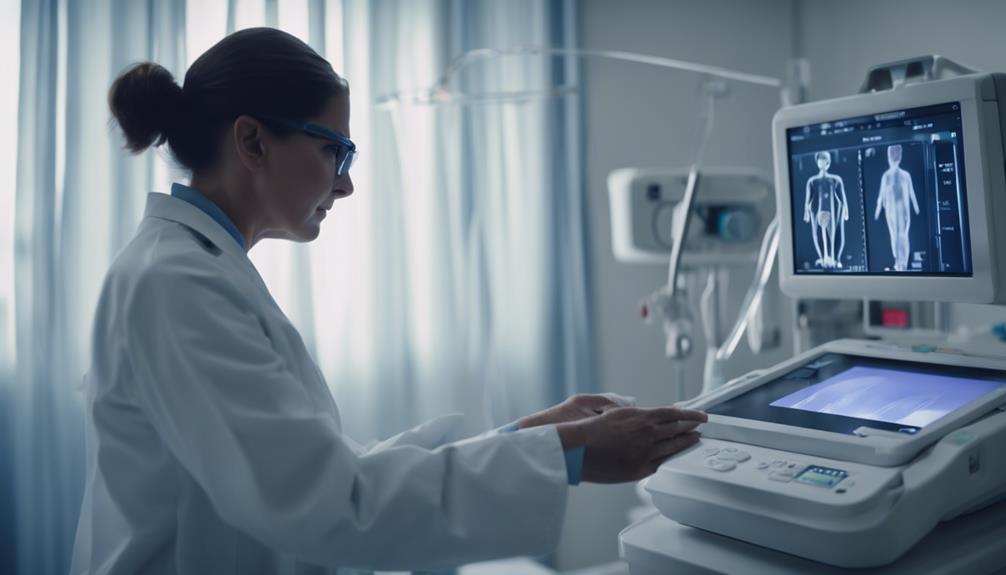
As you explore the world of non-invasive bladder scanners, you'll find that measurement precision and clinical validation are essential.
These devices must be accurate to guarantee they're reliably guiding clinical decisions and improving patient outcomes.
It's important that you understand how variations in accuracy, like those seen in the BladderScan® models, can impact clinical settings.
Measurement Precision
Bladder scanners greatly enhance the precision of bladder volume measurements, demonstrating accuracy rates between 83% to 100% when evaluating the need for catheterization at different volume thresholds.
When you're deciding on a non-invasive method for measuring bladder volumes, it's essential to take into account not just the accuracy but also the reliability of the technology. Bladder scanners shine particularly when measuring larger volumes, where precision is paramount.
Here are some key advantages of using non-invasive bladder scanners:
- Reduced Patient Discomfort: Since there's no need for catheter insertion, you'll experience less discomfort and a lower risk of complications like urinary tract infections.
- Heightened Accuracy: Particularly effective at volumes greater than 550 mL, ensuring that decisions regarding catheterization are based on precise data.
- Adaptability: Especially useful in patients with complicating conditions such as abdominal fluid collections, where traditional methods may falter.
Choosing a bladder scanner means you're opting for a method that not only minimizes patient discomfort but also delivers reliable and accurate results.
This makes them an indispensable tool in modern medical practice, ensuring patient safety and enhancing the efficiency of healthcare delivery.
Clinical Validation
Delving into the clinical validation of non-invasive bladder scanners reveals a complex picture of accuracy and reliability. These devices, employing ultrasound technology, are tasked with measuring bladder volumes—a crucial factor in managing patients post-operatively. You might find it surprising that the accuracy levels can swing considerably.
For instance, the BladderScan® models often miss the ±15% accuracy target needed for precise bladder volume estimation. Specifically, in a study with surgical patients, the BVI 9400 model overestimated bladder volumes by an average of +17.5%, while the Prime® models typically underestimated by between -4.1% and -6.3%.
You should know that accurate bladder volume measurements are essential for preventing complications like postoperative urinary retention (POUR). The use of bladder scanners is recommended for post-operative patients to monitor urinary output, helping you decide when urinary catheterization is necessary without the associated risks of catheterization.
However, factors such as patient-specific conditions like abdominal fluid collections can affect the accuracy, necessitating a careful interpretation of results. Despite these variations, studies have shown that bladder scanners can considerably aid in clinical decision-making, with accuracy rates ranging from 94 to 100% in identifying patients who needed catheterization based on specific volume thresholds.
Patient Comfort and Safety
Ensuring your comfort and safety, non-invasive bladder scanners represent a notable advancement in medical technology.
These devices are pivotal in optimizing patient comfort, particularly because they avoid the discomfort and potential risks associated with catheterization. You won't need to endure the invasive insertion of a catheter, which not only causes discomfort but also increases the risk of urinary tract infections (UTIs).
The scanners work by using ultrasound technology to assess your bladder volume quickly and painlessly, providing immediate results. This means less waiting and worry for you and quicker decision-making for your healthcare provider.
By minimizing the physical and psychological discomfort often associated with invasive procedures, these scanners enhance your overall experience during medical evaluations.
Here are three key benefits of using non-invasive bladder scanners:
- Reduced Risk of Infections: Eliminates the need for catheters, notably lowering the chance of catheter-associated UTIs.
- Quick and Painless: Fast assessments without the need for sedation or invasive methods.
- Suitable for Various Patients: Ideal for individuals with cognitive impairments or those in post-operative recovery, improving safety across diverse patient groups.
Cost-Effectiveness Analysis

Analyzing the cost-effectiveness of non-invasive bladder scanners reveals some compelling financial benefits for healthcare facilities. The initial expense might seem intimidating, but when you consider the savings on catheterizations, labor, and supplies, it's a no-brainer.
You'll also dodge the costly bullet of complications like catheter-associated urinary tract infections (CAUTIs), which alone can set you back over $1,000 per incident. By using a non-invasive bladder scanner, you're not just saving money; you're stepping up infection control.
The real kicker? This tool helps reduce unnecessary catheter days, leading to shorter hospital stays and, consequently, lower healthcare costs overall. It's a cost-effective option that not only saves dollars but also enhances patient care.
You're looking at a device that pays for itself by slashing the need for invasive procedures and their associated risks.
Moreover, the use of a non-invasive bladder scanner sharpens clinical decision-making. You can catch complications before they balloon into bigger problems, ensuring timely interventions.
This isn't just about cutting costs—it's about smarter, more efficient healthcare management. Investing in this technology means investing in a healthier bottom line and better patient outcomes.
Ease of Use and Training
While the financial benefits of non-invasive bladder scanners are significant, the simplicity of their operation also adds considerable value. You'll find these devices are supremely user-friendly, which means you don't need extensive training to get started. This ease of use is particularly valuable in busy clinical settings where time and efficiency are paramount.
The training programs designed for these scanners make them accessible for all healthcare professionals. These programs typically include:
- Didactic education: You'll learn the theoretical aspects of bladder scanning.
- Hands-on practice: You'll get practical experience with the device.
- Skill refreshers: These help maintain your proficiency and confidence over time.
This approach guarantees that even if you're new to the technology, you'll quickly become comfortable and proficient. The user-friendly nature of the bladder scanners, coupled with effective training, enhances your ability to provide better patient care.
Regular updates and support further facilitate integration into daily practice, promoting a collaborative environment among your healthcare team. All these factors make adopting bladder scanning technology a smart choice for improving operational efficiency and patient outcomes.
Diagnostic Advantages
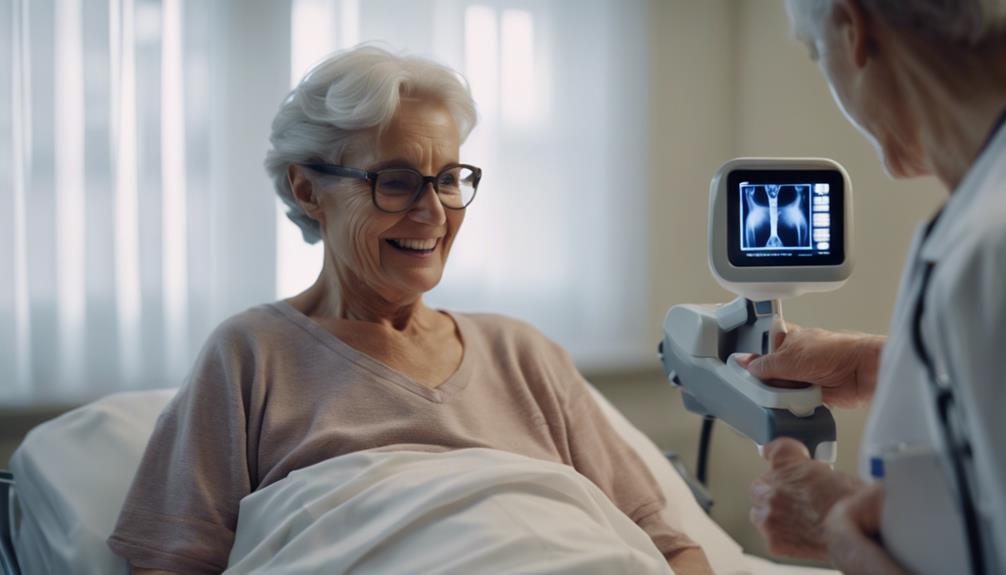
You'll find that the non-invasive bladder scanner markedly enhances patient safety by avoiding the complications associated with traditional catheterization, like infections and trauma.
Its ability to measure bladder volume accurately guarantees that you can trust the readings, which are essential for making informed clinical decisions.
This technology not only improves the precision of diagnoses but also increases patient comfort and compliance.
Enhanced Patient Safety
Non-invasive bladder scanners markedly enhance patient safety by utilizing ultrasound technology to accurately assess bladder volume. This method considerably lowers your risk of infections and trauma, often associated with traditional catheterization methods.
You'll appreciate how this technology prioritizes your well-being and comfort, delivering quick and reliable assessments without discomfort.
Here's why you should consider the benefits of a non-invasive bladder scanner:
- Reduced Risk of Infections: Avoids the need for catheters, which are common culprits for urinary tract infections.
- Minimized Trauma: Eliminates the physical discomfort and potential complications of inserting and maintaining a catheter.
- High Accuracy: Guarantees accurate bladder volume assessments, essential for preventing conditions like urinary retention.
Especially after surgery, you're at an increased risk for urinary retention. Accurately measuring bladder volume with a non-invasive bladder scanner can help manage and prevent this complication, enhancing your overall recovery process.
Not only does it increase patient comfort, but it also supports clinical decisions regarding the necessity of catheterization, with accuracy rates as high as 94-100% in identifying cases where intervention isn't required.
This tool is particularly beneficial for at-risk groups, including post-operative patients and those with specific medical conditions affecting bladder function.
Accurate Volume Measurement
With ultrasound technology, non-invasive bladder scanners deliver precise measurements of bladder volume, greatly enhancing diagnostic accuracy. These devices are a game changer in how you understand and manage your bladder health, particularly in identifying urinary retention and measuring post-void residual volume.
When you use a non-invasive bladder scanner, you're relying on a tool that reports accurate bladder volume with a high degree of reliability. Studies indicate these scanners can detect volumes requiring attention—specifically those greater than 300 mL—with accuracy rates between 94-100%. This means you're less likely to undergo unnecessary catheterizations, which not only are uncomfortable but also pose additional health risks.
Furthermore, knowing the mean post-void residual volume is essential for evaluating urinary retention; normal values should be less than 100 mL. This precise measurement is significant, especially after surgical procedures, as it helps prevent complications such as postoperative urinary retention (POUR).
Bladder scanners prove especially beneficial for individuals with neurogenic bladder or spinal cord injuries. In these cases, exact volume assessment is imperative for effective management, ensuring that treatment plans are appropriately tailored to your specific needs.
Reducing Hospital Stays
By enabling immediate assessment of bladder volume, non-invasive bladder scanners greatly cut down on hospital stays. You'll see that with these devices, the need for invasive procedures is minimized, reducing the risks of infections and complications that could otherwise prolong your stay in the hospital.
Here's how bladder scanning directly impacts hospital stays:
- Timely Decision-Making: Immediate bladder volume readings allow for quick decisions on whether catheterization is necessary, avoiding unnecessary delays in your care and potential complications from urinary retention.
- Prevention of Complications: By accurately measuring postvoid residual (PVR) volume, bladder scanners help prevent urinary retention, a common issue that can lead to extended hospitalization.
- Streamlined Patient Management: High accuracy in detecting the need for catheterization (94-100%) means that your medical team can manage your care more efficiently, potentially reducing your time in the hospital.
These benefits contribute considerably to faster recovery times and improved patient satisfaction.
Adopting bladder scanning protocols, especially in postoperative care, enhances overall patient outcomes and speeds up the discharge process.
As you look for ways to guarantee a quicker, safer hospital discharge, consider the role of non-invasive bladder scanning in your care plan.
Applications in Pediatric Care

How does non-invasive bladder scanning transform pediatric care? By using a non-invasive bladder scanner, you're guaranteeing a safe, comfortable method to assess bladder function without the need for painful catheterization. This minimizes anxiety for young patients, making the diagnostic process less intimidating.
These scanners accurately measure residual urine volume in children, which is essential for diagnosing conditions like urinary incontinence and retention. With the data from a scanner, you can better plan further management or interventions, getting a clear picture of bladder efficiency and urine flow dynamics.
This early diagnosis of bladder issues is critical; it can prevent long-term complications, promoting better urinary health in the long run. Moreover, involving families in the bladder scanning process is encouraged. This not only enhances the support system for the young ones but also guarantees that caregivers fully understand the procedures and results.
You'll find it's an approach that turns a potentially stressful experience into an informative, family-centered one. In pediatric care, the use of non-invasive bladder scanners truly embodies the principle of doing no harm while achieving the best outcomes for children.
Future Trends in Bladder Scanning
Advancements in bladder scanning technology are set to transform patient care dramatically. As you navigate the evolving healthcare landscape, you'll find that new ultrasound devices not only refine how bladder volume is measured but also enhance the clarity and precision of images.
This leap in technology means you can expect more accurate assessments and improved clinical outcomes for your patients.
Integration of artificial intelligence is poised to revolutionize the non-invasive monitoring of bladder health. AI's ability to analyze and interpret bladder volume data in real-time minimizes human error, ensuring that you're informed with the most accurate information when making clinical decisions.
Here's what you should be excited about:
- Advanced ultrasound devices that provide sharper, more detailed images.
- AI integration for real-time, error-reduced data analysis.
- Optimized protocols for patients with the following specific conditions like ascites or morbid obesity, enhancing diagnostic accuracy across diverse patient groups.
Moreover, the surge in portable and user-friendly devices will likely boost their usage not just in hospitals but also in outpatient and home care settings.
As you look ahead, the focus on better educational programs will further equip you to utilize these advancements effectively, ensuring every patient receives the best care possible.
Frequently Asked Questions
What Is the Benefits of Bladder Scanner?
Bladder scanners boost patient comfort by avoiding painful catheterizations. They offer high diagnostic accuracy, quickly measuring bladder volume to identify issues like retention effectively.
This technology also enhances healthcare efficiency, streamlining patient management and reducing unnecessary interventions. Plus, they're easy to use, requiring minimal user training.
Opting for a bladder scanner means prioritizing safety, comfort, and efficiency in medical care.
What Is the Disadvantage of Bladder Scanner?
You might find bladder scanners frustrating due to their accuracy issues, often missing the ±15% accuracy target.
They can be costly and often require specific training, which adds to the overall expense.
Additionally, using these devices can be uncomfortable for certain patients, particularly those with conditions like obesity or ascites, where inaccuracies are more probable.
All these factors combined can make bladder scanners less appealing in some clinical settings.
Why Would a Nurse Use a Bladder Scanner?
As a nurse, you'd use a bladder scanner as a key diagnostic tool in your nursing practice.
It's essential for patient assessment, especially to detect urinary retention efficiently. This device allows you to measure bladder volume non-invasively, offering a quick, accurate snapshot of a patient's condition.
Why Would a Doctor Order a Bladder Scan?
If you're experiencing urinary issues, your doctor might order a bladder scan to check your bladder's health efficiently and comfortably.
This scan guarantees diagnostic accuracy in evaluating how completely you're emptying your bladder, aiding in precise treatment planning.
It's a quick, pain-free procedure that boosts clinical efficiency by avoiding invasive techniques, enhancing your comfort while providing critical data for managing your condition effectively.
Conclusion
As you consider the best options for bladder care, remember that a non-invasive bladder scanner can be a game-changer. It's not only safe and accurate but also cost-effective, reducing hospital stays and enhancing patient comfort. Whether it's for adult or pediatric care, incorporating this technology simplifies clinical decisions and promotes quicker recoveries. Stay ahead with this user-friendly tool that aligns with future trends in medical technology, ensuring high-quality care and optimized health outcomes.
